
Django Moves to Annual Releases: What the New Release Cycle Means for Developers and Hosting Customers
The Django web framework is preparing for one of the most significant changes to its release strategy in years.
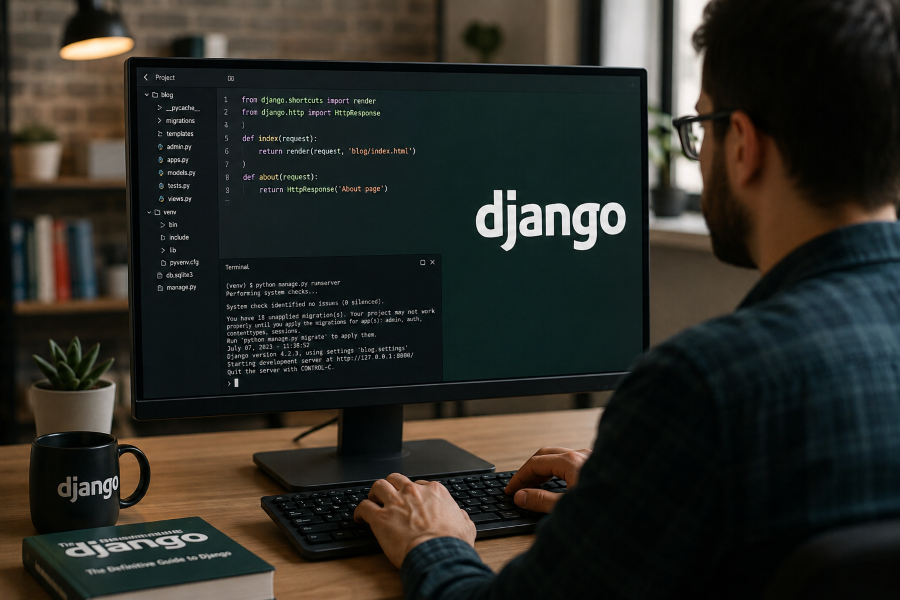
Django Moves to Annual Releases: What It Means for Developers and Hosting Customers
The Django web framework is preparing for one of the most significant changes to its release strategy in years.
The Django Steering Council has approved Django Enhancement Proposal 20, known as DEP 20, which will move Django from its current eight-month feature-release cycle to one major feature release per year beginning in January 2028.
The change will also introduce year-based version numbers and give every future Django feature release three years of support.
For developers, businesses and organizations running Django applications, the new approach should make upgrades more predictable and long-term maintenance easier to plan.
Django 2028 replaces Django 7.0
Under the new system, Django will eventually move away from familiar version numbers such as Django 5.2 and Django 6.1.
The first release under the new model will be Django 2028, scheduled for January 2028. It replaces what would previously have been Django 7.0.
Future feature releases will follow the calendar year:
Django 2028
Django 2029
Django 2030
The new numbering system should make it easier to tell when a Django version was released and approximately how long it will remain supported.
Every Django release effectively becomes an LTS release
Perhaps the biggest benefit for organizations running production Django applications is the new support model.
Django currently distinguishes between regular feature releases and designated Long-Term Support, or LTS, releases.
Beginning with Django 2028, that distinction will disappear because every annual feature release will receive three years of support.
As Carlton Gibson explained in Django's official announcement:
“Every feature release gets three years of support: one year of mainstream bugfixes, then two years of security and data-loss fixes.”
The LTS label will therefore be retired because every feature release will receive the same three-year support commitment.
This creates a rolling system in which three Django versions can be supported at the same time.
For website owners and hosting customers, this should mean less pressure to wait for a particular LTS release or make a large jump across several Django versions at once.
Better alignment between Django and Python
The change also addresses an important technical issue: Django and Python have been operating on different release schedules.
Python releases a new version annually in October, while Django's eight-month cycle has not aligned neatly with that schedule.
Under the new model, each Django release will support the three latest Python versions available when it is released and can add support for the next Python version during its first year.
This should create a cleaner relationship between supported Django and Python versions.
For hosting providers such as WebsitePlaza, this can make it easier to maintain predictable combinations of Python, Django and server environments.
A more manageable upgrade path
The annual schedule should also make Django upgrades easier to plan.
Instead of waiting several years for an LTS release and potentially dealing with a large number of framework changes at once, developers will be able to move from one annual release to the next while still having a substantial support window.
Django describes this approach as being able to “upgrade one year at a time.”
Django's API stability and deprecation policies are not changing. Because feature releases will now be further apart, some deprecation periods will actually become longer in calendar time.
That can be particularly helpful for businesses running important applications where upgrades must be carefully tested before deployment.
Nothing changes immediately
The new release model does not begin until 2028.
Django's current releases will continue under the existing schedule.
Django 6.1
Release: August 2026
Mainstream support ends: April 2027
Extended support ends: December 2027
Django 6.2 LTS
Release: April 2027
Mainstream support ends: December 2027
Extended support ends: April 2030
Django 2028
Release: January 2028
Mainstream support ends: January 2029
Extended support ends: January 2031
Django 2029
Release: January 2029
Mainstream support ends: January 2030
Extended support ends: January 2032
Django 2030
Release: January 2030
Mainstream support ends: January 2031
Extended support ends: January 2033
Existing support commitments for Django 5.2 LTS and Django 6.2 LTS remain unchanged.
What this means for WebsitePlaza customers
For WebsitePlaza customers hosting Django applications, the announcement is generally good news.
Annual releases, predictable three-year support windows and closer alignment with Python should simplify long-term application maintenance.
Businesses will have clearer timelines for deciding when to upgrade Python, Django and related third-party packages.
It should also reduce some of the uncertainty around whether to adopt a current Django feature release or wait for the next LTS version.
WebsitePlaza will continue to follow Django and Python developments as the ecosystem prepares for Django 2028.
Customers running Django applications should continue keeping their applications, dependencies and Python environments supported and up to date rather than waiting until a version reaches end-of-life.
The transition also provides plenty of preparation time. Django 6.2 LTS, scheduled for April 2027, will remain supported until April 2030, providing a substantial overlap with the new annual release model.
A simpler future for Django
Django has long emphasized stability and backwards compatibility. DEP 20 does not change that philosophy.
Instead, it reorganizes Django releases around a simpler and more predictable schedule: one feature release each year, three years of support for every release, easier-to-understand version numbers and closer coordination with Python.
For developers building long-lived web applications, the changes could make Django even easier to maintain in production.
The new release cycle begins with Django 2028 in January 2028. Until then, the existing Django 6.x release and support schedule remains in effect.
Source: Django Project, “Django is moving to an annual release cycle,” posted August 10, 2026.
Comments
0 commentsLeave a comment
Share a helpful question or thought about this article.